CMS & Back-End Consolidation
Kindred / 32Red — Lead Product Designer — 4 months — 2022–2023

⚠ Some visuals are restricted or anonymised due to ongoing NDA obligations.
📣 Context
Teams across the business, from acquisition and content to promotions, game categorisation and segmentation, ran critical work on several ageing in-house tools. They were not built for large data sets, concurrent operations or many users with different roles, so they slowed down or crashed at peak times.
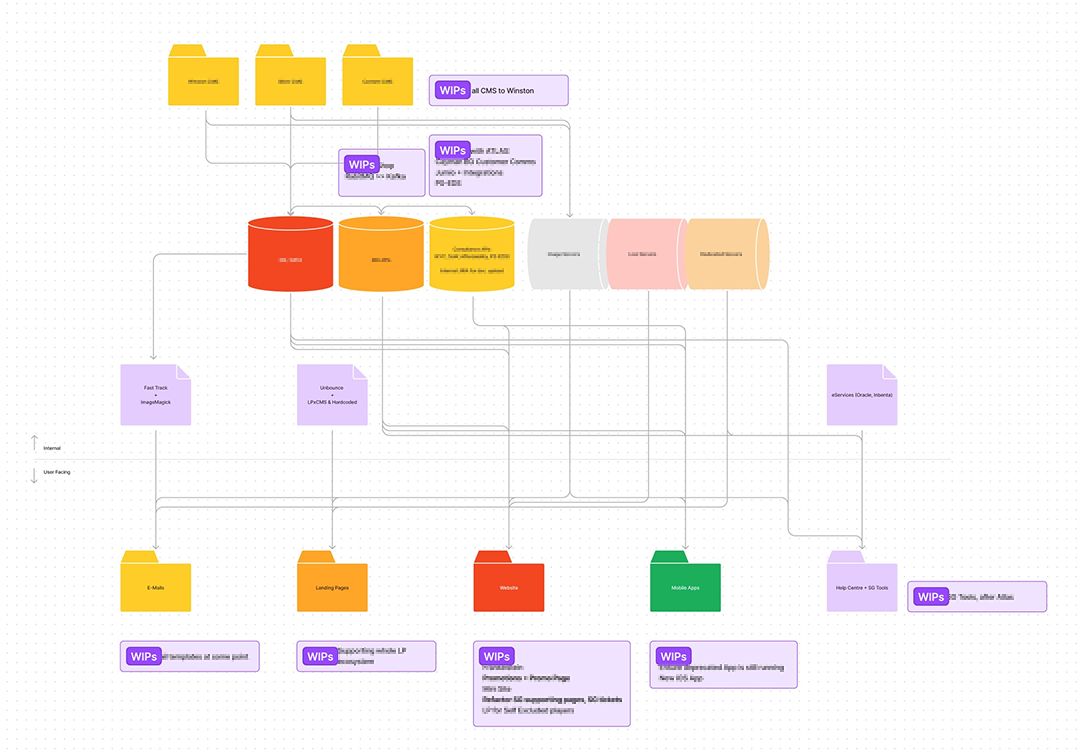
The cost did not stay in the back office. Back-end problems reached players directly, and front-end improvements were impossible without deep back-end changes. The brief: unify those tools into Winston, one role-based CMS for multiple brands, game providers, markets, regulation, languages, currencies and CRM, with the performance to match.
🏆 Outcomes
Winston did not stay a 32Red tool: other brands and teams across the group went on to adopt it.
🥋 My Role & the Team
For this project, I led a team of 15 people: From researchers, to product designers, architects and content writers.
I laid the research foundation and the first system and information architecture, set the architecture and the priorities for the MVP and the releases after it, and defined Winston's visual identity and overall experience.
🧭 Key Decisions
- One tool, many roles. Instead of a tool per team, Winston is role-based: each team works in the same system and sees what its job needs.
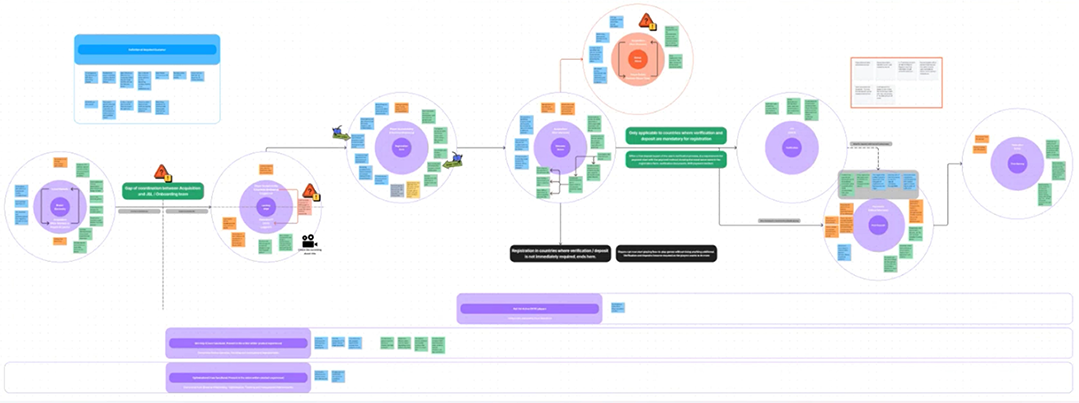
- Start with the people who lived with the old tools. Before drawing anything, I interviewed developers, QA, product managers, stakeholders, and both long-time and new users, to understand requirements, pain points and delivery roadmaps.
- Architecture sets the order. The system architecture decided what went into the MVP and what came in the releases after it.
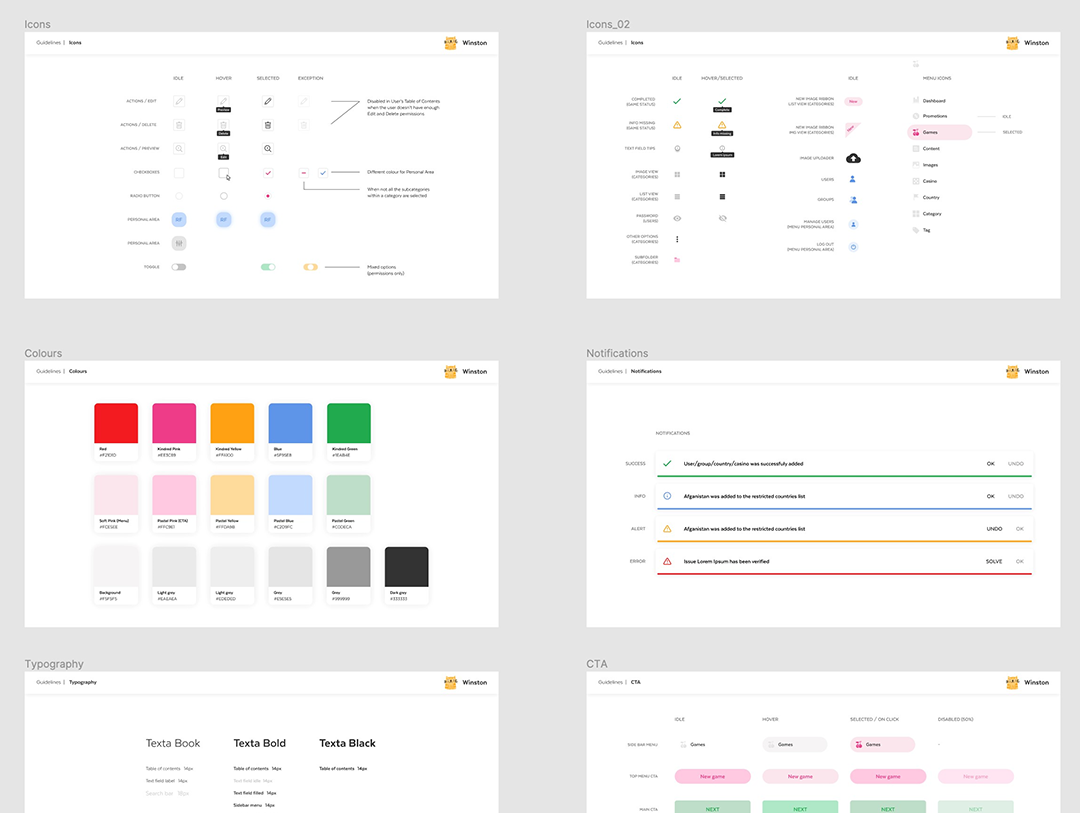
- One language for very different jobs. Content, promotions, games and compliance work look nothing alike; a single visual identity gave Winston one consistent language across all of them.
- Design for the casino a few years ahead. We imagined tighter regulation, much clearer dashboards on spend and gameplay, deeper integration with games and promotions, and real-time personalisation, which gave Winston a roadmap and a list of capabilities to grow into.
👥 How I Led It
Findings from the interviews became the first maps, flows and information architecture, then prototypes and the visual identity. Workshops and presentations ran throughout with Development, Data & BI, Compliance & Player Safety, CRM, SEO & Acquisition, Customer Support and Sustainability, and regular reviews with key stakeholders kept progress visible and aligned.
Winston was also a chance to review regulatory, compliance and payment processes, and simplify them into smoother journeys for players.
🖼️ What Shipped
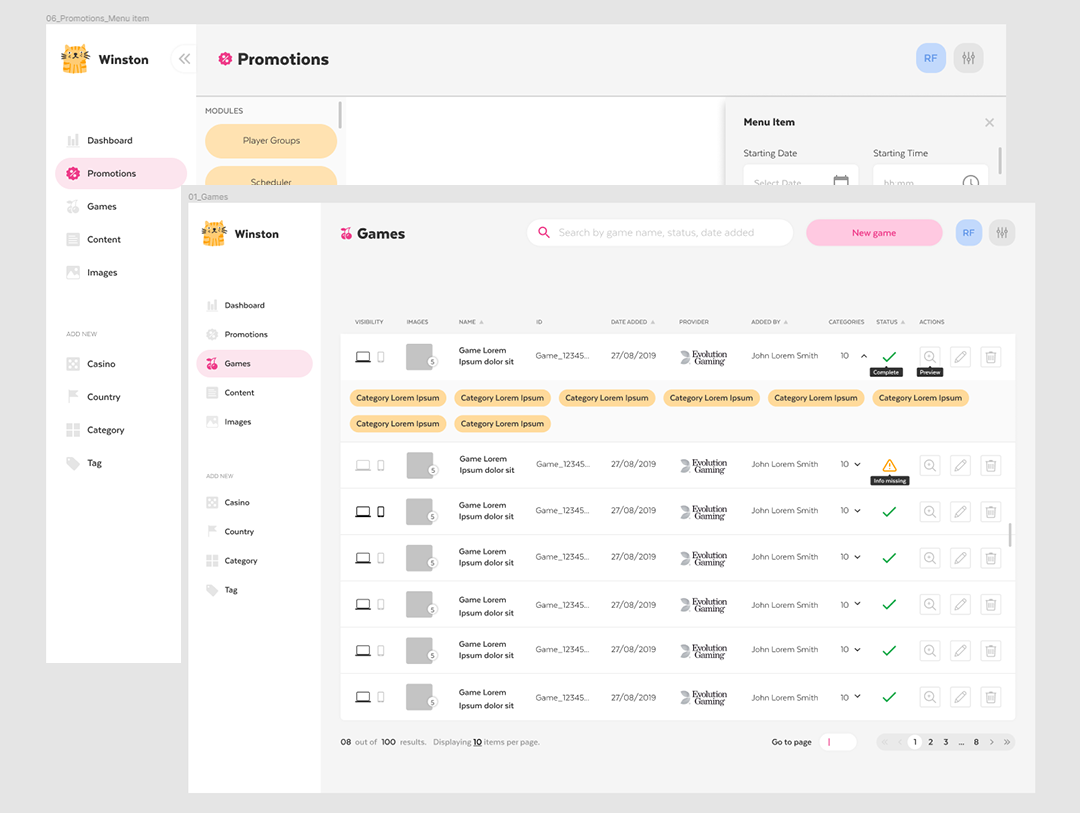
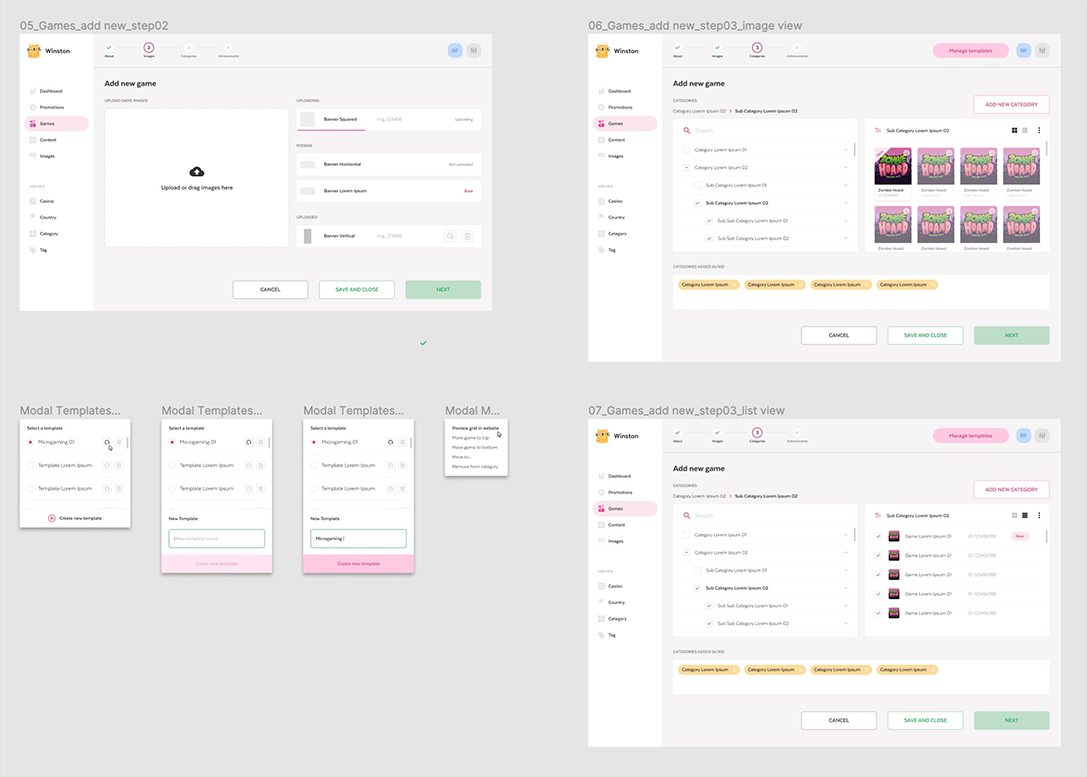
- A casino "in a box": multi-brand, multi-locale and multi-provider, with compliance checks and safety audits by country.
- Restrictions by player group, bonus abuse, game, locale and provider.
- Game and provider management: categorisation, relevance and cross-selling.
- Content, promotions and promotional journeys in one place, with revision history, built-in SEO and simpler landing-page creation for acquisition.
- Infrastructure and database restructured for performance.
🧠 Takeaways
- The back office is part of the player experience. When internal tools fail at peak time, players feel it first.
- Design for where regulation is going, not where it is. Imagining the next few years gave the team a roadmap for the coming years, not just a list of fixes.